


Short answer: diversity and inclusion in accounting means building a team that reflects the clients it serves and giving everyone on it the same fair shot at good work, training and promotion. For a Dallas–Fort Worth accounting or bookkeeping firm it comes down to four practical things: where you recruit, how you decide who is hired and promoted, how you train, and how you measure progress, all within Texas and federal anti-discrimination law.
Key takeaways
- Diversity is who is on the team; inclusion is whether they can do their best work there.
- Women are well represented among accountants but far less among partners and senior leaders.
- Texas Labor Code Chapter 21 (employers with 15 or more employees) and federal laws such as Title VII prohibit discrimination in hiring, pay and promotion.
- Small firms can start with three habits: a wider recruiting pool, structured interviews and a yearly review of who gets promoted.
Diversity and Inclusion (D&I) are essential concepts in today’s workplaces, promoting a culture where everyone feels valued and respected regardless of their background. But why is D&I so important in accounting and bookkeeping? How can it benefit your business?
In today’s workplace, it is important to support diversity and inclusion, because it can give a business a competitive edge. Companies that focus on diversity and inclusion have happier employees, make better decisions, and perform better financially. For example, diverse teams are 30% more likely to outperform their peers.
This blog will explore the current state of D&I in accounting, its benefits, strategies for improvement, and how LUCI Financial Solutions can help your business foster a more inclusive environment. By learning about and using D&I, you can create new ideas, bring in excellent employees, and improve how people see your company.
Understanding Diversity & Inclusion In Detail

Diversity refers to the variety of differences among people, including race, gender, age, religion, and more. Inclusion means creating an environment where everyone feels valued and has equal opportunities to succeed.
Diversity vs. Inclusion
| Diversity | Inclusion |
| Focuses on differences | Focuses on embracing and valuing those differences |
| Representation of various groups | Ensuring all groups feel welcomed and valued |
| Example: Hiring a diverse team | Example: Encouraging all team members to share ideas |
How to read this table: the left column is about who you hire; the right column is about what happens after they start. A firm can hire a diverse team and still lose those people if client assignments, meetings and promotions keep running the old way, which is why the strategies below cover both columns.
Why D&I Matters in Accounting?
Diversity and inclusion are very important in accounting and bookkeeping because they bring different points of view, which helps with solving problems and coming up with new ideas. Inclusive workplaces also attract and retain top talent, enhancing overall business performance.
At LUCI Financial Solutions, we believe in the power of D&I to drive success. Our team is committed to fostering an inclusive environment where every voice is heard. Learn more about our services and how we can help your business thrive with effective D&I strategies.
Current State of Diversity & Inclusion in Accounting
The accounting industry is improving by including people from different backgrounds, but some problems still need to be solved. Women and ethnic minorities are still underrepresented in senior roles, highlighting ongoing issues. Understanding these barriers is crucial for fostering a more inclusive workplace in accounting and bookkeeping.
D&I Statistics in Accounting:
The accounting industry is slowly making progress in diversity and inclusion, but there is still a long way to go. For instance, women make up about 61% of accountants but only 24% of partners in accounting firms. Similarly, not many people from different cultural backgrounds are in high-level jobs.
Common Challenges & Barriers to D&I:
- Unconscious Bias: Many hiring managers may have unconscious biases that affect their decision-making.
- Lack of Diverse Talent Pipeline: There are fewer candidates from diverse backgrounds entering the accounting field.
- Cultural Barriers: Differences in cultural backgrounds can lead to misunderstandings and a lack of inclusion.
- Resistance to Change: Some firms may be resistant to implementing D&I initiatives, preferring to stick to traditional practices.
- Limited Training & Awareness: Without proper training, employees may not understand the importance of D&I or how to implement it.
D&I Issues in Accounting & Bookkeeping:
In accounting, some specific problems with diversity and inclusion are that there are not enough women and minorities in top leadership roles.
For example, women often face challenges in advancing to senior roles due to a lack of mentorship and networking opportunities. Similarly, minority groups may encounter cultural barriers and discrimination, affecting their career growth.
4 Key Strategies for Promoting Diversity & Inclusion:
Promoting diversity and inclusion (D&I) in accounting is vital for creating a balanced and innovative workplace. Effective strategies include diverse hiring practices, comprehensive training programs, and continuous development. These strategies help build an inclusive culture where everyone can thrive.
1. Recruitment & Hiring:
Implementing diverse hiring practices is the first step toward a more inclusive workplace. This involves:
- Diverse Job Boards: Posting job openings on platforms that cater to underrepresented groups.
- Inclusive Job Descriptions: Using language that welcomes applicants from all backgrounds.
- Blind Recruitment: Removing personal details from applications to prevent bias.
Real-life example: A tech company increased its diversity by 30% by implementing blind recruitment and partnering with diverse job boards. LUCI Financial Solutions uses these strategies to ensure a fair and inclusive hiring process.
2. Training & Development:
Offering diversity and inclusion training and promoting ongoing learning is important for creating a culture where everyone feels included. Key components include:
- Regular Training Sessions: Offering workshops on unconscious bias and cultural competence.
- Mentorship Programs: Pairing employees with mentors from different backgrounds to promote learning and growth.
- Feedback Mechanisms: Creating channels for employees to provide feedback on D&I initiatives.
Real-life example: A multinational corporation saw a 40% increase in employee satisfaction after implementing regular D&I training and mentorship programs. LUCI Financial Solutions provides tailored training programs to support ongoing development and foster an inclusive workplace.
3. Workplace Culture:
Creating a workplace where everyone feels accepted and included is important for supporting diversity and inclusion. This means creating a space where every employee feels valued and respected. Encourage open communication by having regular team meetings where everyone can share their ideas and feedback. Collaboration across different departments and backgrounds enhances creativity and innovation.
Dealing with biases we don’t realize we have is very important. Our unconscious thoughts and feelings can make us treat people unfairly and make decisions that are not fair. Train employees to understand and stop their biases. For example, workshops about different cultures can help team members to understand and value different viewpoints.
4. Leadership & Accountability:
Leadership plays a pivotal role in promoting D&I. Leaders set the tone for the organization, so it’s important they actively support and model inclusive behaviors. They should communicate the importance of D&I and integrate it into the company’s mission and values.
Setting and tracking D&I goals ensures progress. These goals could include increasing the diversity of the workforce, promoting more women and minorities to leadership positions, or creating employee resource groups. Regularly review these goals and adjust strategies as needed.
Holding leaders accountable for D&I’s progress is essential. Create measurements for diversity and inclusion in the workplace and use them to assess leaders’ performance. This makes sure that they see promoting diversity and inclusion as a very important part of their job. For instance, a company could connect some of the top leaders’ extra pay to reaching diversity and inclusion goals.
Use These Tools & Resources for Enhancing D&I

Promoting diversity and inclusion (D&I) in the workplace can be greatly enhanced by using various tools and resources. These tools help businesses make a more welcoming environment and make sure that diversity and inclusion plans are done well.
At LUCI Financial Solutions, we leverage these tools and resources to help businesses implement effective D&I strategies. By embracing diversity and inclusion, you can create a thriving, innovative, and competitive workplace.
1. Technology Solutions:
There are many technology solutions available to support D&I efforts. For example:
- D&I Software: Tools like Workday and BambooHR offer features for tracking diversity metrics and managing D&I programs.
- Analytics Tools: Platforms like Tableau and Power BI can analyze workforce data to identify diversity gaps and monitor progress.
2. External Resources:
External resources are also crucial in promoting D&I. These include:
- Organizations: Groups like the National Diversity Council and SHRM provide valuable resources and support for D&I initiatives.
- Training Programs: Various programs and workshops offer training on unconscious bias, cultural competence, and inclusive leadership.
How These Tools & Resources Boost Business Growth?
- Improved Decision-Making: Different teams with different people think in unique ways and come up with better ideas. In addition, Analytics tools can help find and fix differences in people, making sure decisions are fair for everyone.
- Work on Employee Satisfaction: Inclusive workplaces improve employee morale and retention. Furthermore, Training programs foster a sense of belonging and respect among employees.
- Better Financial Performance: Companies with diverse teams are 35% more likely to outperform their peers. In addition, D&I initiatives attract top talent, contributing to business growth.
- Stronger Company Reputation: Demonstrating a commitment to D&I enhances your brand’s image. Moreover, Organizations known for their inclusive practices attract a broader customer base.
Case Studies & Success Stories | Motivate Yourself
Many companies have made changes to include more diversity in their workplaces, and it has led to great results. Here are some examples:
Highlighting Successful Companies:
- Microsoft: Microsoft hired more different kinds of people and made rules to include everyone. They reported a 40% increase in women and minority employees in technical roles from 2015 to 2020.
- Procter & Gamble (P&G): P&G introduced comprehensive D&I training programs, resulting in a 30% improvement in employee satisfaction and a 15% increase in productivity.
Lessons Learned from These Examples:
- Set Clear Goals: Establish specific, measurable D&I objectives. Moreover, regularly track progress against these goals.
- Foster an Inclusive Culture: Encourage open communication and collaboration. Furthermore, provide regular D&I training to all employees.
- Leverage Technology: Use tools to track diversity numbers. Furthermore, Implement D&I software for better management and tracking.
- Engage Leadership: Make sure leaders show and support inclusive behaviors. Moreover, holds leaders accountable for D&I outcomes.
Impact of D&I on Business Outcomes:
Using good plans for diversity and inclusion has caused many good things to happen. Companies that have a variety of people on their teams say they come up with more new ideas and are more creative. They also make better decisions and do better financially.
For example, McKinsey & Company found that companies with diverse executive teams are 21% more likely to experience above-average profitability.
Measuring the Impact of D&I Initiatives:
To measure the impact of diversity and inclusion (D&I) initiatives, businesses need to track specific metrics. These include:
- Diversity Metrics: Representation of various groups in the workforce.
- Inclusion Metrics: Employee engagement and satisfaction levels.
- Equity Metrics: Pay equity and career progression rates.
6 Main Steps for Collecting and Analyzing D&I Data:
- Conduct regular employee surveys on workplace inclusion and satisfaction.
- Collect anonymous feedback to ensure honest responses.
- Analyze hiring, promotion, and retention data.
- Monitor demographic changes over time.
- Evaluate performance review data for potential biases.
- Track participation in D&I training programs.
Importance of Regular Assessments & Adjustments:
Regular assessments ensure that D&I initiatives are effective. Businesses should:
- Review D&I Metrics: Assess progress towards goals.
- Adjust Strategies: Modify initiatives based on data insights.
- Continuous Improvement: Foster an environment of ongoing learning and adaptation.
Benefits of Diversity & Inclusion in Accounting

Different teams bring different views, which helps them solve problems better and come up with new ideas. When people from different backgrounds collaborate, they offer unique solutions and ideas.
For example, a team of accountants from different backgrounds can find better ways to make financial jobs easier, making the whole company work smoother.
Improved Employee Satisfaction & Retention:
Workers feel important and treated fairly in a workplace where everyone is included. This makes them feel happier and less likely to leave their job. Happy employees are more productive and committed to the company.
- Higher Engagement: Inclusive environments foster greater employee engagement.
- Lower Turnover: Employees are less likely to leave a company that values diversity.
Better Financial Performance & Client Relations:
Companies with diverse teams often see better financial performance. McKinsey & Company found that companies in the top quartile for gender diversity are 21% more likely to experience above-average profitability.
- Stronger Client Relations: Diverse teams can better understand and cater to a wide range of clients.
- Increased Market Share: Inclusivity can attract new clients who value diversity.
Common Challenges in Implementing D&I Initiatives:
- Unconscious Bias: Employees and managers may have unconscious biases that affect hiring and promotion decisions.
- Resistance to Change: Some employees might resist new D&I policies and practices.
- Lack of Awareness: Employees may not understand the importance of D&I or how to practice it effectively.
Practical Solutions for Overcoming These Challenges:
- Training Programs: Regular training on unconscious bias and cultural competence can help employees understand and challenge their biases.
- Clear Communication: Explain the benefits of D&I to all employees and involve them in the process.
- Leadership Support: Make sure the leaders of the company show and support inclusive behaviors.
Texas and federal rules every Dallas employer should know
Inclusion programs work inside the law, not around it. In Texas, Chapter 21 of the Texas Labor Code makes it unlawful for an employer with 15 or more employees to discriminate in hiring, pay, promotion or firing because of race, color, disability, religion, sex, national origin or age. Federal laws enforced by the EEOC, including Title VII of the Civil Rights Act, the Americans with Disabilities Act and the Age Discrimination in Employment Act, cover the same ground nationally.
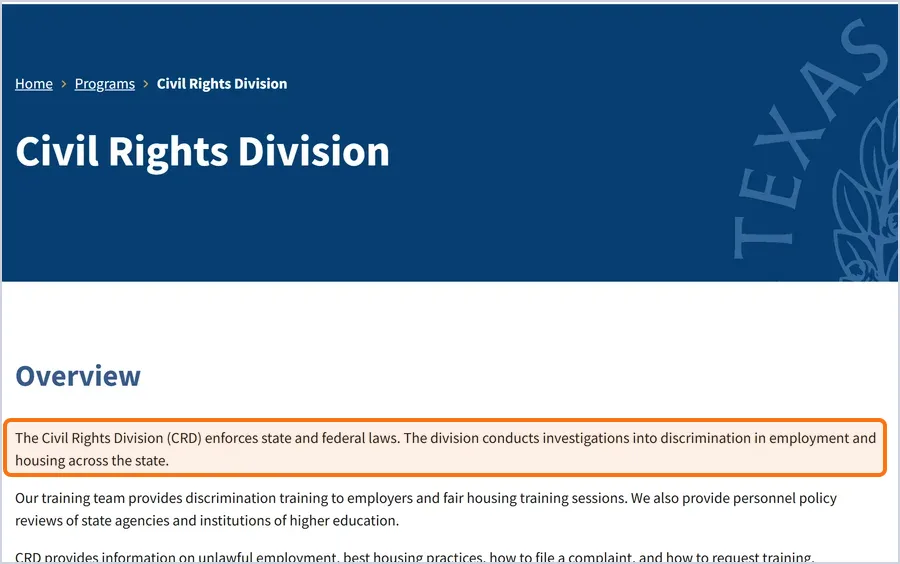
For a Dallas firm, the Texas Workforce Commission’s Civil Rights Division is the state office that investigates employment discrimination complaints, alongside the federal EEOC. Its training team also offers discrimination training for employers, which is a practical first step for a small firm writing its first D&I policy. For questions about your own situation, talk to an employment attorney.
A simple D&I plan for a small accounting or bookkeeping firm
Large firms have D&I departments. A Dallas firm of five to fifty people needs a short list of habits it can keep and check once a year. This is the plan we suggest to owners who ask where to start.
| Practice | What it looks like in a small firm | What to measure once a year |
|---|---|---|
| Wider recruiting | Post every role beyond employee referrals: job boards, local college accounting programs and professional associations | Where applicants came from, and who was hired |
| Structured interviews | The same questions for every candidate, scored by two people against the skills the job needs | Interview scores vs. hiring decisions |
| Fair work assignment | Rotate the larger and more visible client accounts instead of always giving them to the same people | Who handled the top 10 clients this year |
| Training and mentoring | A training budget and a named mentor for every new hire in their first year | Hours of training per person; who has a mentor |
| Promotion and pay review | Written criteria for each level and a yearly pay check by role | Who was promoted; pay gaps by role |
How to read this table: the middle column is the habit and the right column is the proof. If you can only start one, start with structured interviews: they cost nothing, make hiring fairer and give you a written record of why each decision was made.
What this means when you hire an outside bookkeeping team
Many Dallas–Fort Worth owners first meet these questions when they hire help rather than staff. The same test applies: you should know who does the work, who checks it and how decisions are made. At LUCI Financial Solutions, a named bookkeeper keeps your books, our Senior Accountant reviews them before you receive anything, and LaTara Scott leads the controller and advisory work. Read a dedicated bookkeeper or a bookkeeping team and how to choose a Dallas bookkeeper for the questions to ask, or see our bookkeeping services in Dallas.
Frequently asked questions
What does diversity and inclusion mean in accounting?
Diversity means an accounting team made up of people of different backgrounds, genders, ages and experiences. Inclusion means each of them gets a fair share of client work, training, feedback and promotion, and can speak up without risk.
Which laws apply to diversity and hiring at a Texas accounting firm?
Texas Labor Code Chapter 21 prohibits employment discrimination by employers with 15 or more employees, and federal laws such as Title VII of the Civil Rights Act do the same nationally. The Texas Workforce Commission Civil Rights Division and the EEOC investigate complaints. An employment attorney can tell you how they apply to your firm.
How can a small accounting firm improve diversity in recruitment?
Widen where you look rather than who you pick: post roles beyond referrals, write job ads around the skills the work needs, use the same structured interview questions for every candidate, and have more than one person score the answers.
How do you measure diversity and inclusion in a small firm?
Track a few numbers once a year: who applied and who was hired, who got the larger client accounts, who was promoted, and who left and why. Even in a firm of ten people, those patterns show whether practices are fair.
Does diversity matter when choosing a bookkeeping firm?
It matters most in how well the firm understands your business. Ask who will do your books, who reviews them, and how they handle questions, so you know the people and the process behind your numbers.
In Conclusion:
Diversity and inclusion (D&I) are crucial for success in accounting and bookkeeping. They help come up with new ideas, make employees happier, and make more money. Making D&I a priority in your business strategy helps to create a work environment where everyone feels included and can be more productive. For expert guidance on implementing effective D&I strategies, contact LUCI Financial Solutions.
If you run an accounting, legal or professional services firm in Dallas–Fort Worth and want clean books and clear numbers behind your people decisions, schedule a consultation or call 214-233-5454.
Clear numbers for your firm
LUCI Financial Solutions keeps the books, payroll records and monthly reports for Dallas–Fort Worth professional firms, reviewed by a senior accountant every month. See bookkeeping for professional services firms.